In today’s interconnected world, sending money across borders has become a routine part of global life. Whether it’s students paying university fees abroad, families sending support to loved ones, or businesses paying international partners, cross-border payments are more important than ever.
Traditionally, international transfers were slow, expensive, and often lacked transparency. However, advancements in financial technology (FinTech) are transforming the global payments landscape. Modern digital solutions are making cross-border payments faster, safer, and more efficient than ever before.
The Traditional Challenges of Cross-Border Payments
Before digital innovation, international money transfers relied heavily on traditional banking systems. These systems often involved:
I. Multiple intermediary banks
II. High transaction fees
III. Limited transparency
IV. Processing times of several days
For individuals and businesses, this meant delayed payments and unpredictable costs.
Today, technology is solving these problems by streamlining the way money moves internationally.
1. Digital Remittance Platforms
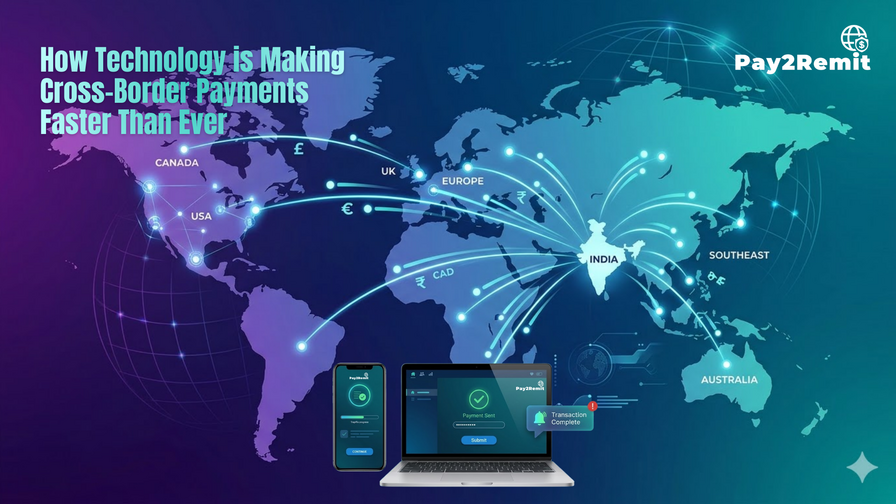
One of the biggest innovations in international payments is the rise of digital remittance platforms. These platforms allow users to send money abroad through online portals or mobile apps.
Instead of relying solely on traditional banking networks, digital platforms use automated payment systems and optimized routing technologies to process transactions quickly.
Benefits include:
a. Faster transfers, often within minutes
b. Competitive exchange rates
c. Transparent fee structures
d. Easy tracking of transactions
This has significantly improved the experience for people sending money internationally.
2. Real-Time Payment Networks
Real-time payment infrastructure is another major technological advancement. Many countries are now adopting instant payment systems, which allow funds to be transferred and received within seconds.
When integrated with international payment platforms, these systems help reduce delays caused by traditional settlement processes.
For businesses and individuals, this means greater speed and convenience when sending money across borders.
3. Advanced Payment APIs and Integration
Modern payment systems rely heavily on Application Programming Interfaces (APIs). APIs enable different financial systems to communicate with each other seamlessly.
For example, fintech platforms can integrate with banks, payment gateways, and financial institutions to create a smooth end-to-end transaction process.
This technology allows:
a. Faster transaction approvals
b. Real-time payment processing
c. Automated currency conversion
As a result, cross-border payments become much more efficient.
4. Enhanced Security and Fraud Prevention
Security has always been a critical concern in international payments. Today, advanced technologies such as:
I. Artificial Intelligence (AI)
II. Machine learning
III. Biometric authentication
IV. Encryption protocols
are helping financial platforms detect suspicious activities and prevent fraud.
These technologies make cross-border payments more secure and reliable for both businesses and individuals.
5. Transparent Exchange Rates and Fees
One of the major frustrations with traditional international transfers was the lack of transparency in exchange rates and fees.
Modern fintech platforms use real-time foreign exchange data to provide clear and competitive currency rates. Customers can now see exactly how much money will be delivered to the recipient before confirming a transaction.
This transparency helps users make informed financial decisions and avoid hidden charges.
6. Better Solutions for Businesses and Partners
Technology is also enabling businesses to participate in the global payments ecosystem through white-label financial solutions.
With the help of fintech infrastructure, companies such as travel agencies, education consultants, and financial service providers can now offer services like:
a. Foreign currency exchange
b. Forex cards
c. International money transfers
without building complex financial systems from scratch.
These solutions help businesses expand their service offerings and improve customer experience.
The Future of Cross-Border Payments
As technology continues to evolve, the future of international payments looks even more promising. Innovations such as blockchain-based settlements, AI-powered compliance systems, and global payment networks are expected to further improve speed, transparency, and security.
In the coming years, sending money across countries may become as quick and simple as sending a message on a smartphone.
Conclusion
Technology is redefining how money moves around the world. From digital remittance platforms and real-time payment systems to advanced security technologies, fintech innovations are making cross-border payments faster and more accessible.
For individuals, this means convenient and reliable international transfers. For businesses, it opens new opportunities to participate in the global financial ecosystem.
As digital payment technologies continue to grow, cross-border transactions will only become more seamless, efficient, and user-friendly.