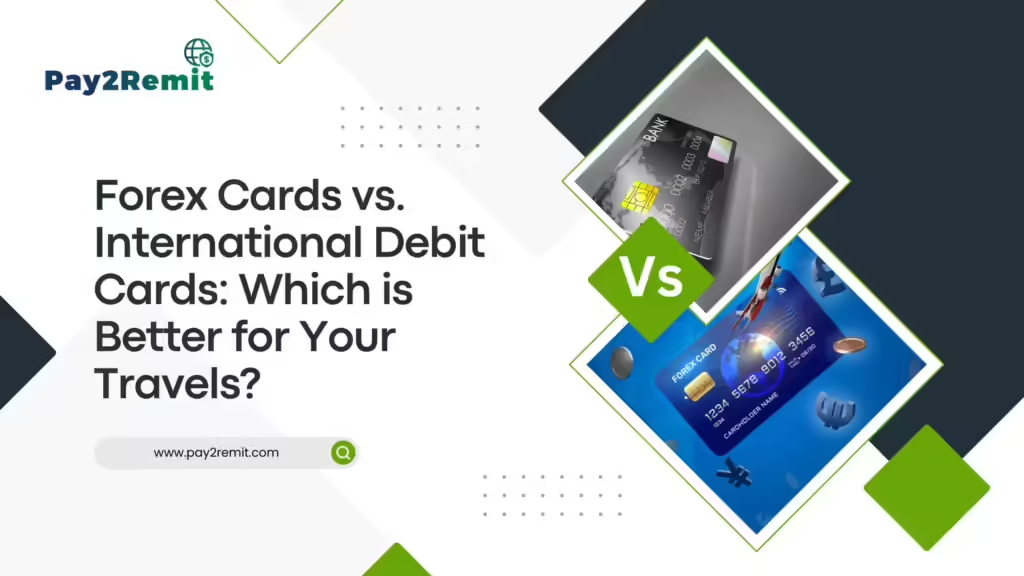
Traveling internationally requires careful financial planning to ensure a hassle-free experience. One critical decision is choosing between a Forex Card and an International Debit Card. Both options have unique advantages, and the best choice depends on your travel habits and needs. Let’s delve into their features, benefits, and drawbacks to help you make an informed decision.
What Are Forex Cards and International Debit Cards?
Forex Cards
A Forex Card, also known as a prepaid travel card, allows you to load and spend foreign currency during your travels. These cards are not linked to a bank account, offering fixed exchange rates and secure transactions.
Key Features:
- Load single or multiple currencies.
- Lock in exchange rates at the time of loading.
- Not tied to a savings account.
➡️ Learn more about how to exchange foreign currency in India for your travel needs.
International Debit Cards
An International Debit Card is linked to your bank account and facilitates transactions in foreign currencies by converting your home currency (e.g., INR) at the prevailing exchange rate.
Key Features:
- Directly debits your bank account.
- Requires international transaction activation.
- Exchange rates fluctuate during transactions.
Forex Cards vs. International Debit Cards: A Detailed Comparison
| Feature | Forex Card | International Debit Card |
|---|---|---|
| Security | High (not linked to bank account) | Moderate (linked to main account) |
| Exchange Rate | Fixed at the time of loading | Fluctuates with market rates |
| Fees | Minimal (zero markup, low ATM fees) | High (markup + transaction fees) |
| Convenience | Supports multiple currencies | Requires account activation |
| Expense Tracking | Real-time tracking via apps | Limited tracking capabilities |
| Usability in Remote Areas | May not be accepted in all places | Accepted widely |
| Reloadability | Easy via online platforms | Not applicable |
Advantages of Forex Cards
- Fixed Exchange Rates:
Locking the exchange rate protects against market fluctuations, saving money on transactions.
➡️ Explore the advantages of API integration in financial services to understand how technology enhances forex services.
- Cost-Effective:
Forex Cards often come with zero markup fees, lower ATM withdrawal charges, and no hidden costs. - Multi-Currency Support:
Ideal for multi-country travel, these cards allow seamless transactions in multiple currencies. - Enhanced Security:
Not linked to your primary bank account, they reduce the risk of exposing your savings to theft or fraud. - Expense Management:
Mobile apps provide real-time tracking and budgeting tools.
Advantages of International Debit Cards
- Ease of Use:
Familiar functionality makes them intuitive and simple to use without additional steps like preloading.
➡️ For short-term travelers, see top tips for first-time international money transfers.
- Widely Accepted:
International Debit Cards are accepted globally at most ATMs and merchants. - Backup for Forex Cards:
Serve as a convenient backup when you run out of funds on your Forex Card.
Who Should Choose a Forex Card?
- Frequent Travelers: Save on fees with locked exchange rates and multi-currency options.
- Students Studying Abroad: Manage tuition and living expenses securely.
➡️ Read managing multiple currencies with Pay2Remit for additional insights.
Who Should Choose an International Debit Card?
- Occasional Travelers: Prefer the convenience of direct access to their bank account.
- Short-Term Travelers: Don’t want to go through the hassle of obtaining a Forex Card.
➡️ Learn how to choose the right forex remittance partner for your business.
FAQs: Your Travel Finance Questions Answered
- Can I use Forex Cards for online shopping?
Yes, Forex Cards can be used for online transactions in the currency loaded on the card. - What happens if my Forex Card is lost?
Most providers offer a replacement card and the ability to block your lost card instantly. - Are Forex Cards better for multi-country travel?
Absolutely. Forex Cards support multiple currencies, making them ideal for multi-country trips. - What fees are involved in using an International Debit Card?
Fees include markups (1-3%), foreign transaction charges (up to 3%), and ATM withdrawal fees (₹400-500 per transaction).
➡️ Learn how Pay2Remit supports students during financial emergencies.
Conclusion: Which Is Better for Your Travels?
For most international travelers, Forex Cards offer better cost control, security, and convenience, especially for longer trips or multi-country travel. However, International Debit Cards can serve as a good backup or alternative for short-term travel.
➡️ Discover how to optimize your travel budget with Pay2Remit Forex Card.
Pro Tip: Use a combination of both—a Forex Card for planned expenses and an International Debit Card for emergencies. This ensures maximum convenience, security, and cost-efficiency during your travels.
Start planning your next trip with the right financial tools, and enjoy a hassle-free experience abroad!