
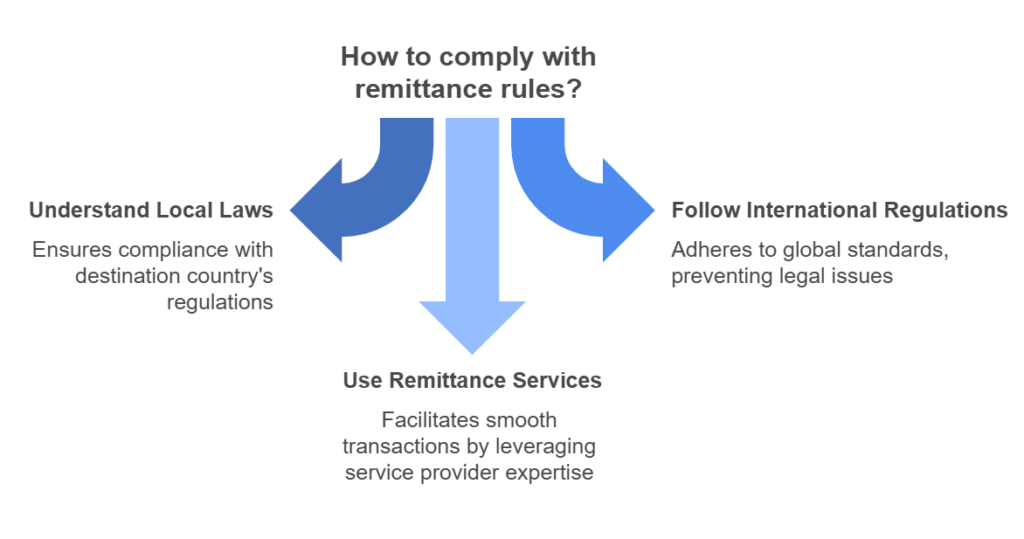
Sending money across borders involves different rules and regulations depending on the destination. Indian expats must comply with local and international laws to ensure smooth and secure transactions. This guide explains the remittance rules in popular expat destinations, helping you make informed decisions while saving time and money.
Why Understanding Remittance Rules Is Important
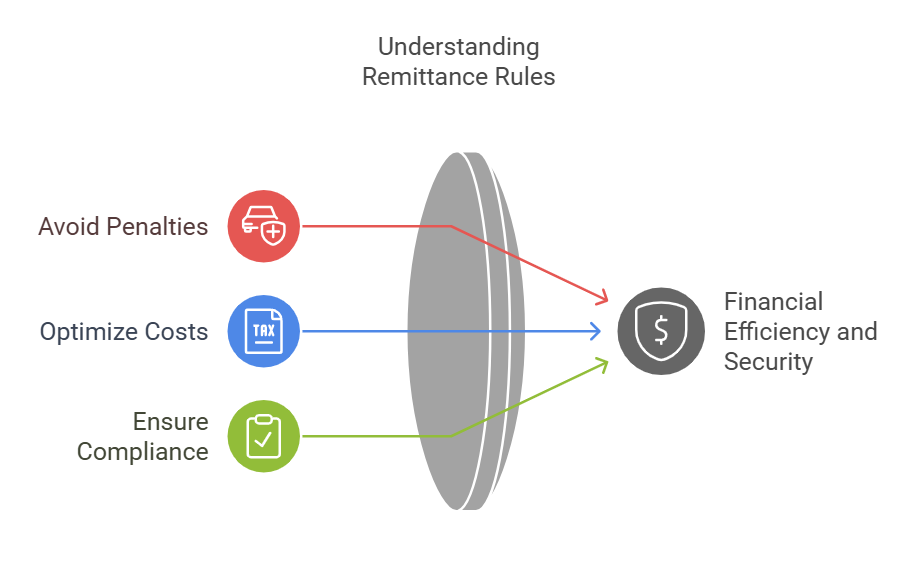
Knowing the regulations helps:
- Avoid Penalties: Non-compliance may lead to fines or transaction blocks.
- Optimize Costs: Proper understanding can reduce hidden charges and taxes.
- Ensure Compliance: Regulatory adherence ensures your funds are secure.
For a detailed understanding of cost-saving strategies, read How Indian Expats Can Save on International Remittance Fees.
1. United States
Key Regulations
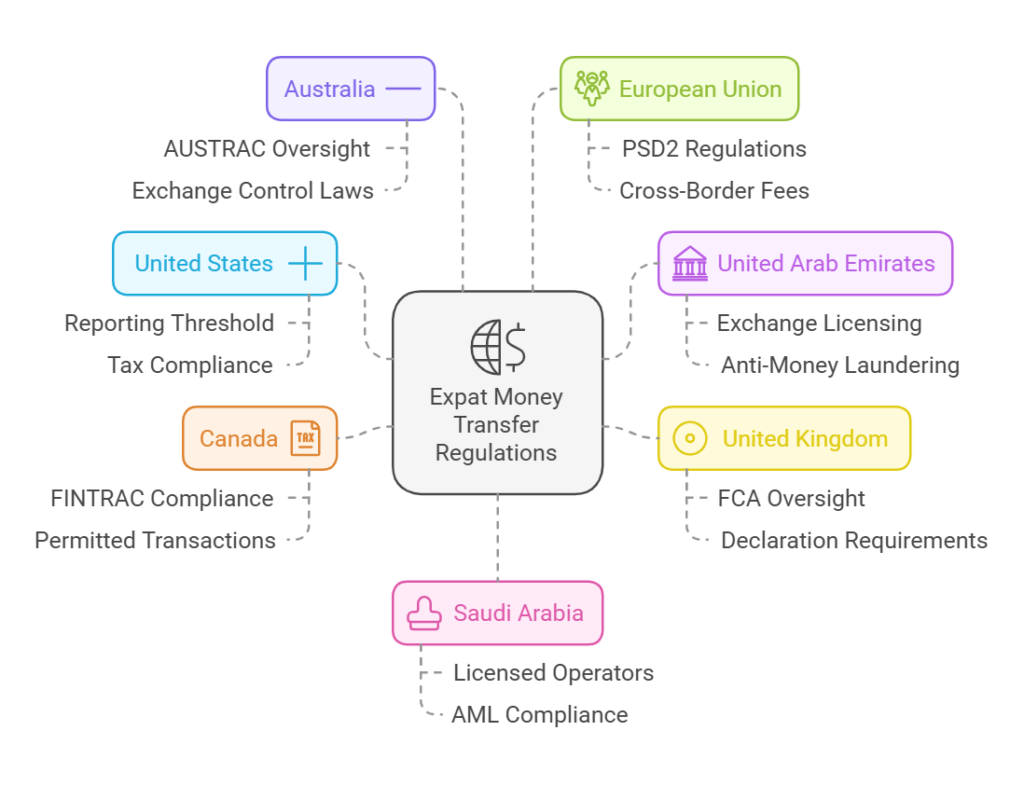
- Reporting Threshold: Transactions over $10,000 must be reported to the Financial Crimes Enforcement Network (FinCEN).
- Tax Compliance: Expats may need to file Form 3520 if the recipient is a foreign trust or account.
- Permitted Purposes: Personal remittances, gifts, and investments are allowed.
Tips for Expats
- Use platforms with transparent exchange rates, like Pay2Remit, to avoid hidden costs.
- Keep transaction records for tax filing purposes.
2. United Arab Emirates (UAE)
Key Regulations
- Exchange Licensing: Transactions must be conducted through licensed exchange houses or banks.
- Anti-Money Laundering (AML): Transfers must comply with UAE Central Bank regulations.
- Document Requirements: Proof of income or identification may be required for large transfers.
Tips for Expats
- Avoid informal channels to prevent penalties.
- Leverage cost-effective platforms such as Pay2Remit for lower fees and compliance.
For UAE-specific insights, check Efficient and Secure Methods for Transferring Living Expenses from India to Dubai.
3. United Kingdom
Key Regulations
- FCA Oversight: Money transfer services must be registered with the Financial Conduct Authority (FCA).
- Declaration Requirements: Transfers exceeding £15,000 may require additional documentation.
- Tax Implications: UK-based income sent abroad may be taxable.
Tips for Expats
- Verify that the service provider is FCA-regulated.
- Consolidate smaller transfers to save on fees.
For more tips, explore Sending Money from India to the UK.
4. Canada
Key Regulations
- FINTRAC Compliance: Transfers over CAD 10,000 must be reported to the Financial Transactions and Reports Analysis Centre of Canada.
- Permitted Transactions: Personal, educational, and family support remittances are allowed.
- Proof of Funds: Large transfers may require income or account verification.
Tips for Expats
- Choose services like Pay2Remit that streamline large transfers for education or family support.
- Maintain detailed records for auditing purposes.
For a complete guide to opening accounts in Canada, read Understanding GICs: A Comprehensive Guide.
5. Australia
Key Regulations
- AUSTRAC Oversight: Transfers over AUD 10,000 must be reported to the Australian Transaction Reports and Analysis Centre (AUSTRAC).
- Exchange Control Laws: Funds must comply with Australian foreign exchange laws.
- Transaction Limits: Daily transfer limits may apply based on the service provider.
Tips for Expats
- Plan larger transactions to stay within daily limits.
- Use platforms like Pay2Remit that ensure regulatory compliance and low fees.
6. European Union
Key Regulations
- PSD2 Regulations: The Payment Services Directive (PSD2) governs electronic transactions across EU nations.
- Declaration Requirements: Transfers above €10,000 may require declarations under anti-money laundering laws.
- Cross-Border Fees: SEPA (Single Euro Payments Area) ensures uniform costs within the EU but may not apply for non-EU transfers.
Tips for Expats
- Use SEPA for intra-EU transfers to save costs.
- For non-EU transfers, platforms like Pay2Remit can provide competitive rates and faster processing.
7. Saudi Arabia
Key Regulations
- SAMA Oversight: The Saudi Arabian Monetary Authority regulates remittance services.
- Licensed Operators: Only licensed entities can process remittances.
- AML Compliance: All transfers are subject to strict anti-money laundering checks.
Tips for Expats
- Avoid unauthorized money transfer operators to ensure security.
- Use Pay2Remit for transparent pricing and regulatory compliance.
How Pay2Remit Simplifies Cross-Border Transfers
AD-II License Advantage
Pay2Remit’s AD-II license allows it to directly handle international transactions while ensuring compliance with RBI guidelines. This eliminates intermediaries, reducing costs and improving transaction speed. Learn more: Why Pay2Remit Excels as an RBI Authorized Dealer.
Key Features
- Transparent Fees: No hidden charges or inflated rates.
- Real-Time Tracking: Monitor your transfer from initiation to completion.
- Fast Processing: Transactions are completed in 1-2 business days.
Final Thoughts
Understanding cross-border remittance rules ensures secure and efficient money transfers. By complying with local laws and choosing the right platform, expats can save time and money. Pay2Remit stands out with its transparent fees, fast processing, and regulatory compliance, making it the ideal choice for expats worldwide.
For more insights, visit Pay2Remit’s Blog.